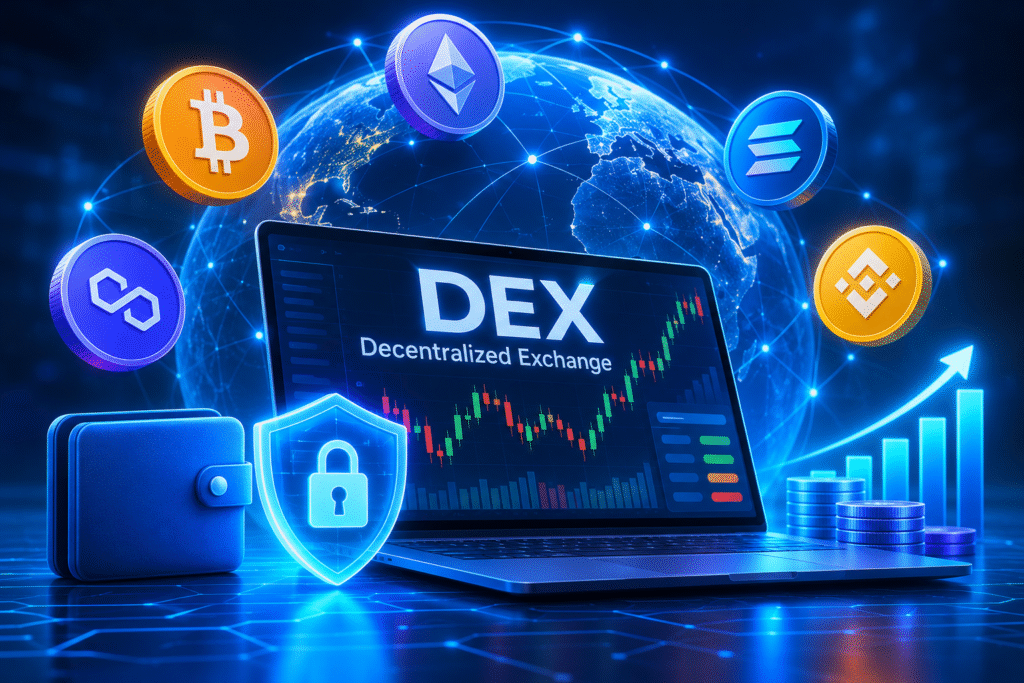
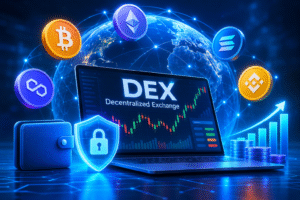
The cryptocurrency industry continues to evolve as businesses explore blockchain technology, decentralized finance (DeFi) and digital asset trading. Decentralized exchanges have become an important part of this ecosystem because they allow users to exchange cryptocurrencies. Businesses planning to enter the DeFi market increasingly seek a reliable Decentralized Exchange Development Company to build secure, scalable and user-friendly trading platforms.
Billion Info Tech provides blockchain, cryptocurrency exchange and fin-tech development solutions that help businesses build digital financial platforms. This guide explains decentralized exchange development, its working process, essential features, development models and how to choose the right DEX development partner.
What Is Decentralized Exchange Development?
Decentralized Exchange Development refers to the process of designing and building a cryptocurrency trading platform that uses blockchain technology and smart contracts to facilitate digital asset transactions.
A DEX allows users to connect their cryptocurrency wallets, select trading pairs and execute token swaps through supported blockchain protocols. Smart contracts manage transaction rules and interact directly with blockchain networks.
Most decentralized exchanges use one of three primary trading models:
1. Automated Market Maker (AMM): AMM platforms use liquidity pools and mathematical pricing formulas to execute cryptocurrency swaps. Liquidity providers deposit supported tokens into pools and may earn a share of trading fees.
2. Order Book Model: Order book exchanges display buy and sell orders. The platform matches available orders based on price and trading conditions. This model can use on-chain or off-chain order management.
3. Hybrid DEX Model: Hybrid exchanges combine elements of AMM and order book architectures to support different trading requirements.
The right architecture depends on the target audience, supported assets, transaction requirements and business objectives.
How Does a Decentralized Exchange Work?
A decentralized exchange uses smart contracts to automate trading operations and interact directly with blockchain networks.
Here is how a typical DEX transaction works:
Step 1: Wallet Connection
Users connect a compatible cryptocurrency wallet, such as MetaMask or Trust Wallet, to access the exchange.
Step 2: Token Selection
The user selects the cryptocurrency they want to exchange and chooses the token they want to receive.
Step 3: Price Calculation
The DEX calculates the expected exchange rate through its liquidity pool, order book or integrated routing system.
Step 4: Transaction Approval
The user reviews the transaction details and approves the required token permissions through their wallet.
Step 5: Smart Contract Execution
The smart contract processes the swap according to its programmed rules and available liquidity.
Step 6: Transaction Confirmation
The blockchain validates and records the transaction. The user can review its status through the relevant blockchain explorer.
This process supports peer-to-peer digital asset trading and reduces the need for a traditional centralized exchange operator to control every transaction.
Essential Features of a Modern Decentralized Exchange Platform
A successful DEX requires a combination of smart contract functionality, blockchain integration and user-friendly trading tools. Businesses should plan essential features before starting development.
1. Non-Custodial Wallet Integration
Wallet integration allows users to connect their cryptocurrency wallets and access trading services.
Popular wallet integration’s include:
- MetaMask
- Trust Wallet
- WalletConnect
- Coin-base Wallet
- Other compatible Web3 wallets
A non-custodial architecture allows users to maintain control of their private keys. The platform should never request users to disclose their seed phrases or private keys.
2. Automated Market Maker (AMM)
An AMM engine allows users to exchange tokens through smart contract-based liquidity pools.
The system uses mathematical formulas to determine token prices based on pool balances and trading activity. Different AMM designs support different pricing curves and liquidity strategies.
A well-designed AMM should support accurate calculations, appropriate slippage controls and reliable transaction processing.
3. Liquidity Pool Management
Liquidity pools play an important role in AMM-based decentralized exchanges.
Users can deposit supported token pairs into liquidity pools and receive liquidity provider tokens or other accounting representations based on the protocol design.
Important liquidity management features include:
- Add liquidity.
- Remove liquidity.
- Pool balance monitoring.
- Liquidity provider rewards.
- Trading fee distribution.
- Pool analytics.
Businesses should design clear liquidity rules and explain the financial risks that liquidity providers may face, including impermanent loss.
4. Smart Contract Integration
Smart contracts automate exchange operations and enforce platform rules.
A DEX may require smart contracts for:
- Token swaps.
- Liquidity pool creation.
- Liquidity deposits and withdrawals.
- Trading fee calculations.
- Token approvals.
- Reward distribution.
- Governance operations.
Developers must test smart contract logic carefully before deployment because programming errors can expose digital assets to serious risks.
5. Multi-Chain Compatibility
Multi-chain support allows businesses to reach users across different blockchain ecosystems.
Depending on the project requirements, a DEX can support networks such as Ethereum, BNB Smart Chain, Polygon, Arbitrum and other compatible blockchain platforms.
Cross-chain functionality requires additional architecture for message verification, transaction coordination and asset movement. Bridge integration’s introduce specific security risks, so businesses must evaluate the security model of every external dependency.
6. Advanced Trading Dashboard
A professional trading dashboard makes the platform easier to navigate and operate.
Useful dashboard components include:
- Token prices.
- Trading pairs.
- Liquidity information.
- Swap history.
- Transaction status.
- Price charts.
- Wallet balances.
- Pool analytics.
A responsive interface helps users access the platform across desktop and mobile devices.
7. Admin Dashboard and Analytics
An administrative dashboard helps platform owners monitor operational information and manage permitted platform settings.
Important functions can include:
- Platform activity monitoring.
- Token and pool configuration.
- Trading volume reports.
- Fee reporting.
- User activity analytics.
- Transaction monitoring.
- Platform configuration controls.
DEX Development Process: From Planning to Deployment
A professional development team should understand the business model and technical requirements before writing smart contracts.
Phase 1: Business Analysis and Planning
The first phase identifies the platform’s target audience, revenue model, trading requirements and supported assets.
The development team defines the project scope, core functionality and technical architecture.
Phase 2: Blockchain and Technology Selection
Developers select the blockchain network, smart contract language, wallet integration’s and supporting infrastructure.
For example, an EVM-compatible DEX may use Solidity for smart contract development.
Phase 3: UI/UX Design
The design team creates a user-friendly interface for wallet connection, token swaps, liquidity management and trading analytics.
Simple navigation and clear transaction information help users understand platform operations.
Phase 4: Smart Contract Development
Developers create and integrate the required smart contracts for trading, liquidity management, fee calculations and other platform functions.
Phase 5: Frontend and Backend Integration
The frontend connects to blockchain infrastructure, wallet providers, APIs and relevant supporting services.
The backend may handle analytics, indexing, notifications and administrative reporting, depending on the chosen architecture.
Phase 6: Security Testing and Auditing
The development team conducts functional testing, smart contract testing and security reviews.
Independent smart contract audits can help identify vulnerabilities before deployment. Testing should also cover reentrancy, access control, arithmetic errors, oracle manipulation and token-handling risks.
Phase 7: Deployment and Maintenance
After testing and approval, developers deploy the platform to the selected blockchain network.
Post-launch services may include performance monitoring, bug fixes, infrastructure maintenance and feature enhancements.
Security Considerations in Decentralized Exchange Development
Security is one of the most important requirements for a cryptocurrency exchange platform. Smart contracts interact directly with digital assets, so even a small programming error can create serious financial consequences.
A professional DEX development strategy should include:
Smart Contract Auditing: Arrange independent reviews of critical smart contracts before deployment.
Access Control: Apply least-privilege permissions and secure administrative functions.
Reentrancy Protection: Use appropriate safeguards against malicious contract interactions.
Oracle Security: Validate external price feeds and protect pricing mechanisms against manipulation.
Slippage Protection: Allow users to define acceptable price movement for swap transactions.
Secure Wallet Integration: Follow established wallet connection and transaction approval practices.
Continuous Monitoring: Monitor unusual transactions, liquidity changes and suspicious contract activity.
Security does not end after deployment. Regular reviews, monitoring and a documented incident response plan help teams manage ongoing risks.
How Does a DEX Development Company Help Businesses?
A professional Decentralized Exchange Development Company helps businesses transform their blockchain ideas into operational trading platforms.
Its responsibilities can cover:
- Business and technical consultation.
- Custom DEX architecture.
- Smart contract development.
- AMM and liquidity pool integration.
- Wallet connectivity.
- Multi-chain development.
- Trading dashboard design.
- Security testing.
- Deployment and technical support.
The right development partner should understand blockchain infrastructure, DeFi protocols, smart contract security and cryptocurrency exchange operations.
Why Choose Billion Info Tech for Decentralized Exchange Development?
Billion Info Tech delivers fin-tech, blockchain and cryptocurrency exchange technology solutions for businesses planning to enter the digital finance industry.
The company focuses on custom technology development, blockchain exchange solutions and financial software infrastructure.
Billion Info Tech can help businesses explore development requirements such as:
Custom Exchange Development: Plan cryptocurrency exchange architecture according to business requirements.
Smart Contract Development: Develop blockchain-based contracts for token operations and decentralized applications.
Blockchain Integration: Connect applications to suitable blockchain networks and supporting infrastructure.
Crypto Wallet Development: Build wallet solutions that support digital asset management and transaction functionality.
Trading Platform Solutions: Develop trading interfaces and supporting systems for cryptocurrency businesses.
Scalable Technology Architecture: Plan infrastructure that supports future platform growth and additional functionality.
Businesses can also explore related services such as crypto exchange development, blockchain development, crypto wallet development and fin-tech software solutions.
Visit the Billion Info Tech official website to explore its technology services and discuss your blockchain development requirements.
Conclusion
Decentralized exchanges are an important part of the evolving DeFi ecosystem. They support blockchain-based asset swaps, liquidity management and peer-to-peer trading through smart contracts.
However, successful DEX development requires careful planning, secure smart contract architecture, suitable blockchain selection, reliable wallet integration and continuous technical monitoring.
Billion Info Tech provides fin-tech, blockchain and cryptocurrency exchange development solutions for businesses exploring digital asset technology. Contact Billion Info Tech to discuss your DEX project and explore a suitable development approach.
Start building your decentralized exchange platform and take your blockchain business idea towards implementation.
Frequently Asked Questions About Decentralized Exchange Development