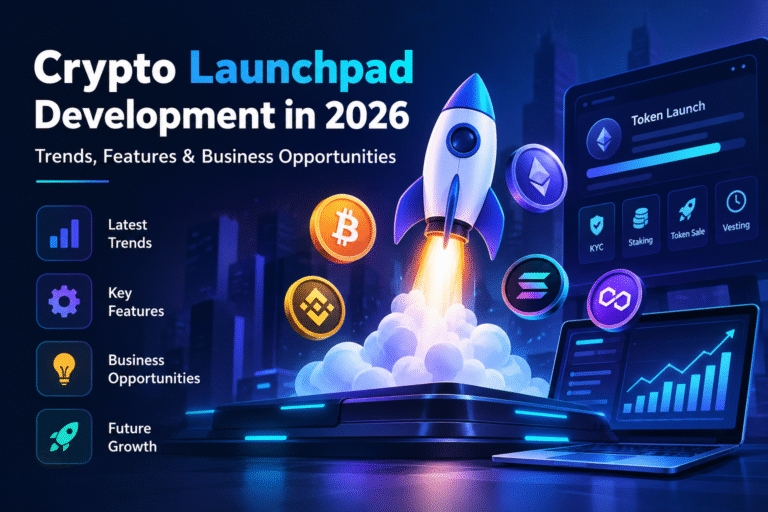
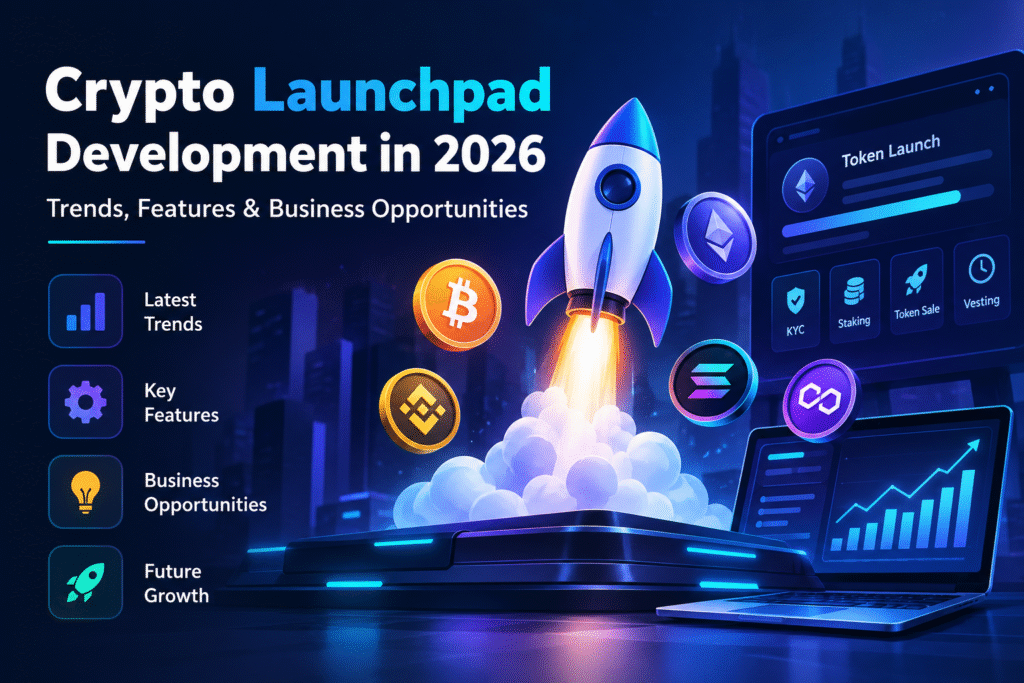
Billion Info Tech helps businesses explore blockchain and Web3 solutions such as crypto launchpad development, and other custom blockchain platforms. A well-built crypto launchpad can give projects a simple place to manage token sales, investors, wallets, token allocation, and distribution.
A crypto launchpad works as a bridge between blockchain projects and potential investors. It provides the technology needed to introduce new tokens in a more organized way.
In this article, we will explain crypto launchpad development, important features, 2026 trends, development steps, and business opportunities.
A crypto launchpad is a platform that helps new blockchain and crypto projects launch their tokens.
You can think of it as a launch platform for new crypto projects.
A project can use a launchpad to:
- Introduce a new token
- Raise funds
- Connect with investors
- Build a community
- Manage token sales
- Verify users
- Distribute tokens
- Offer staking
- Manage token vesting
For investors, the launchpad creates a structured way to discover and participate in new token launches.
Modern launchpads can support different models such as IDO, IEO, ICO, community sales, and other token launch methods.
What Is Crypto Launchpad Development?
Crypto Launchpad Development means building a blockchain-based platform that allows crypto projects to launch and distribute their tokens.
The development can include:
- User dashboards
- Admin dashboards
- Smart contracts
- Token sale systems
- Wallet integration
- KYC integration
- Whitelist management
- Staking
- Token allocation
- Token vesting
- Token claiming
- Analytics
- Security features
The final features depend on the business model and target audience.
A simple launchpad may need basic token sale functions. A large platform may need multi-chain support, advanced allocation systems, KYC, staking, vesting, analytics, and stronger security controls.
Why Is Crypto Launchpad Development Important in 2026?
The crypto market has become more competitive.
Launching a token is no longer just about creating a token contract. Projects also need systems for investor management, token sales, allocation, distribution, and community participation.
A launchpad brings many of these activities together.
For example, a project launching a new token may need to:
- Submit project information.
- Complete project verification.
- Set token sale details.
- Verify eligible users.
- Connect crypto wallets.
- Create a whitelist.
- Accept contributions.
- Calculate token allocations.
- Distribute tokens.
- Manage future token releases.
A good launchpad can automate many of these tasks.
This makes the process easier for both project owners and users.
Top Crypto Launchpad Trends in 2026
The launchpad market continues to develop. Here are some important trends businesses should consider.
1. Multi-Chain Launchpads
Crypto users operate across many blockchain networks.
A modern launchpad can support networks such as:
- Ethereum
- BNB Chain
- Solana
- Polygon
- Arbitrum
- Avalanche
- Base
Multi-chain support allows projects to choose a network that matches their requirements.
It can also help a launchpad reach users from different blockchain communities.
2. AI-Based Project Analysis
AI is becoming more useful across the Web3 industry.
A launchpad can use AI tools to analyze project information, token data, community activity, and other available signals.
AI can help administrators organize information and identify unusual patterns faster.
Human review remains important for important project, compliance, and security decisions.
3. Better KYC and User Verification
User verification is becoming an important part of many crypto platforms.
A launchpad can integrate KYC providers to verify users before they participate in selected token sales.
The system can help check:
- User identity
- Eligibility
- Geographic restrictions
- Required documents
- Whitelist status
Businesses should also consider applicable regulations before launching a token sale platform.
4. Fair Token Allocation
A popular token sale can attract thousands of users.
The platform therefore needs a clear allocation system.
Common methods include:
- Lottery allocation
- First-come-first-served
- Proportional allocation
- Tier-based allocation
- Staking-based allocation
- Guaranteed allocation
The platform should explain the allocation rules clearly before the sale begins.
Clear rules help users understand how the sale works and what they need to do to participate.
5. Anti-Bot Protection
Bots can create problems during popular token launches.
Some users may try to create multiple accounts or use automated systems to gain an advantage.
A modern launchpad can use:
- Wallet checks
- User verification
- Participation limits
- Anti-Sybil controls
- Account monitoring
- Transaction analysis
These systems can help create a fairer launch environment.
This area has become more important as research has identified automated manipulation and other abusive behavior around permissionless token launch platforms.
6. Automated Token Vesting
Many projects do not release all tokens at the time of the initial sale.
They may create a vesting schedule.
For example:
- 10% at launch
- 20% after three months
- 30% after six months
- Remaining tokens over a fixed period
A launchpad can automate this process through smart contracts.
Users can view:
- Claimed tokens
- Locked tokens
- Upcoming tokens
- Vesting dates
This makes token distribution easier to manage.
Important Features of a Crypto Launchpad
A successful crypto launchpad should focus on features that make the platform easy to use and manage.
Project Management
Project owners should have a dashboard where they can submit and manage their token projects.
They can add details such as:
- Project name
- Token name
- Token supply
- Token price
- Sale dates
- Soft cap
- Hard cap
- Vesting schedule
Wallet Integration
Users need an easy way to connect their crypto wallets.
The wallet options depend on the blockchain networks supported by the platform.
The connection process should remain simple because a complicated wallet experience can cause users to leave the platform.
Smart Contract Integration
Smart contracts can automate many important blockchain activities.
They can manage:
- Token sales
- Token allocation
- Staking
- Token claims
- Refunds
- Vesting
- Token distribution
Smart contract security should remain a major priority.
KYC and Whitelist Management
The platform can allow users to complete KYC before participating in selected sales.
Administrators can manage approved users from the dashboard.
This can make the participation process more organized.
Staking System
A staking system can give users additional participation benefits.
For example, users may need to stake platform tokens to qualify for a specific launch tier.
A staking system can also create more utility around the platform’s ecosystem token.
Token Sale Management
Administrators should be able to create and manage token sales.
Important settings can include:
- Token price
- Sale duration
- Minimum contribution
- Maximum contribution
- Soft cap
- Hard cap
- User limits
- Allocation rules
Token Vesting
The vesting system can release tokens according to a predefined schedule.
This reduces manual work and gives users a clear view of future token releases.
Analytics Dashboard
Analytics help launchpad owners understand platform performance.
The dashboard can show:
- Total users
- Verified users
- Active projects
- Token sales
- Funds raised
- Participation
- Revenue
- Wallet activity
- Conversion rates
These insights can help businesses make better decisions.
How to Build a Crypto Launchpad in 2026
Building a crypto launchpad requires proper planning.
Here is a simple development process.
Step 1: Decide Your Business Model
First, decide what type of launchpad you want to build.
You could create:
- IDO launchpad
- ICO launchpad
- IEO platform
- NFT launchpad
- Gaming launchpad
- DeFi launchpad
- Multi-chain launchpad
- White-label launchpad
Your business model will determine the features you need.
Step 2: Select the Blockchain
Choose the blockchain networks you want to support.
Look at:
- Transaction fees
- Transaction speed
- User base
- Ecosystem
- Wallet support
- Developer resources
- Liquidity
You can start with one blockchain and add more networks later.
Step 3: Develop Smart Contracts
Next, develop the smart contracts required by your platform.
These contracts can manage:
- Token sales
- Staking
- Token allocation
- Vesting
- Claims
- Refunds
Security testing should take place before the contracts handle real funds.
Step 4: Build the Platform
The development team can then build:
- Frontend
- Backend
- User dashboard
- Admin dashboard
- Wallet integration
- APIs
- Database
- Smart contract connections
The interface should remain simple.
Users should quickly understand:
- Which project is launching
- When the sale starts
- Token price
- Participation requirements
- Allocation rules
- Token claim dates
Step 5: Test the Platform
Testing is extremely important.
The development team should test:
- Smart contracts
- Wallet connections
- KYC
- Token allocation
- Payments
- Token claims
- Vesting
- Admin controls
- Website performance
Load testing also matters because a successful token launch can bring many users to the platform at the same time.
Step 6: Launch and Promote
After testing, the platform can go live.
The business can then focus on:
- Web3 partnerships
- Project acquisition
- Community building
- Social media marketing
- SEO
- Content marketing
- PR
- Influencer marketing
Business Opportunities in Crypto Launchpad Development
Crypto launchpad development offers several business models.
Launchpad-as-a-Service
Businesses can provide launchpad infrastructure to crypto companies.
The client can use a branded platform while the technology provider manages the core infrastructure.
White-Label Crypto Launchpad
A white-label launchpad gives businesses a ready foundation that they can customize.
The platform can include custom:
- Logo
- Colors
- Domain
- Design
- Dashboard
- Features
- Token sale rules
This can help businesses enter the Web3 market faster.
Token Launch Services
A company can also offer complete token launch services.
These services can include:
- Token development
- Smart contract development
- Launchpad development
- Token sale setup
- Staking
- Vesting
- Wallet integration
Industry-Specific Launchpads
Businesses can create launchpads focused on specific Web3 sectors.
Examples include:
- AI projects
- Web3 gaming
- DeFi
- NFTs
- Metaverse projects
- Real-world assets
- Community projects
A focused launchpad can help a business build a clear identity in a specific market.
Why Choose a Professional Development Partner?
A launchpad combines several technologies.
You need blockchain development, smart contracts, wallet integration, backend systems, frontend development, security, and user experience.
This is why choosing an experienced technology partner can make the development process easier.
Billion Info Tech can help businesses plan and develop customized blockchain and Web3 solutions based on their business goals, target audience, required features, and blockchain requirements.
Crypto Launchpad Development Cost
The cost of developing a crypto launchpad depends on the size and complexity of the platform.
A basic launchpad may need fewer features.
A larger platform may require:
- Multi-chain support
- Advanced smart contracts
- KYC integration
- Staking
- Tier systems
- Token vesting
- Analytics
- Anti-bot systems
- Multiple wallets
- Security audits
For this reason, businesses should first prepare a detailed feature list before asking for a final development estimate.
Future of Crypto Launchpad Development
Crypto launchpads will continue to change as the Web3 market develops.
Future platforms may focus more on:
- Multi-chain support
- AI-based project analysis
- Better user verification
- Stronger security
- Fair token allocation
- Automated vesting
- Anti-bot systems
- Better analytics
- Community-focused launches
The biggest opportunity will not simply come from creating another token sale website.
Businesses need to create platforms that solve real problems for projects and investors.
A simple user experience, strong security, transparent rules, and reliable technology can help a launchpad stand out.
Conclusion
Crypto Launchpad Development has become an important part of the Web3 infrastructure market in 2026. A launchpad can help blockchain projects launch tokens, connect with investors, manage token sales, and automate token distribution.
A launchpad can become a complete Web3 ecosystem that includes staking, KYC, project management, vesting, analytics, wallet integration, and community participation.
The key is to build a platform that is secure, simple, transparent, scalable, and easy to use.
Billion Info Tech can help businesses turn their Web3 ideas into customized blockchain solutions designed around their specific business goals and technical requirements.
Frequently Asked Questions